
Stack Basics · Module 1 of 5
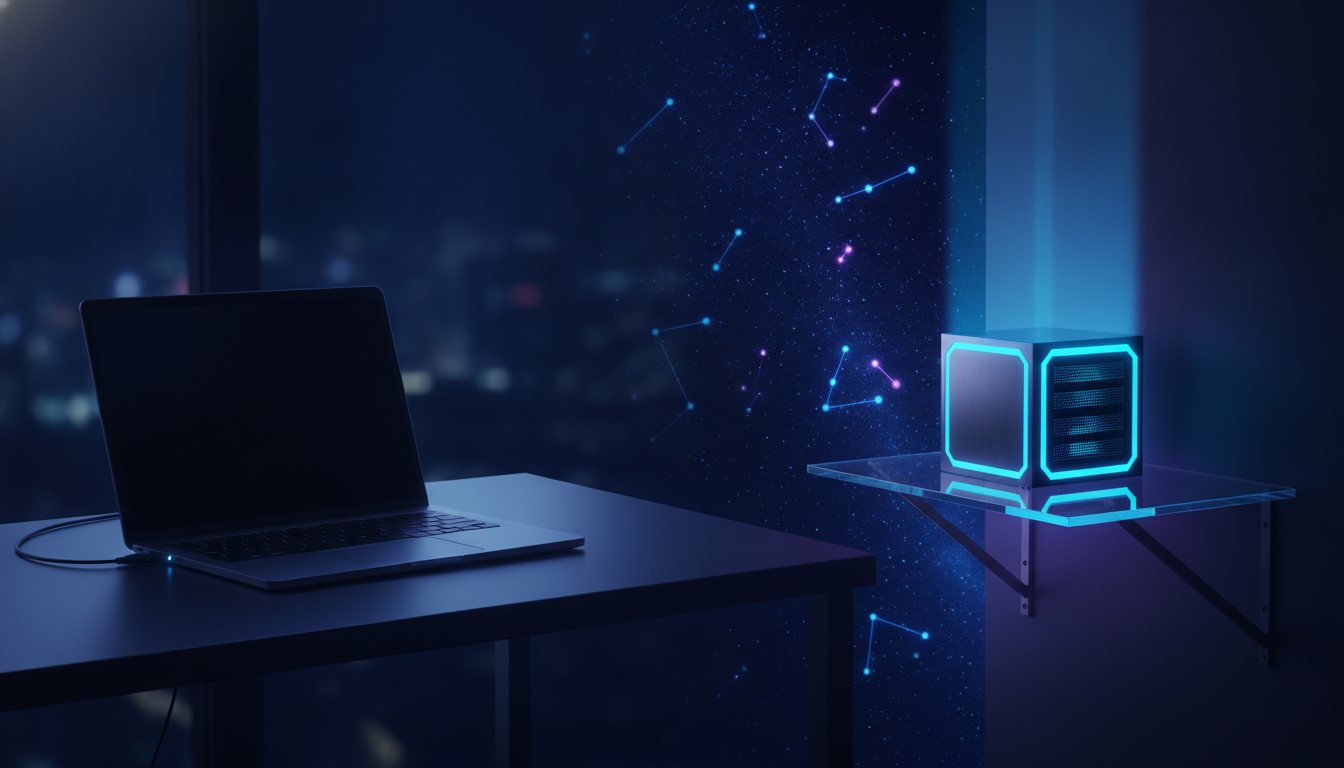
Module 1 — Your laptop is not a vending machine
The whole promise of the agent economy is that software buys from software around the clock. A bot doesn't care that it's 3am your time. If your endpoint is asleep when the bot shows up, there is no "they'll come back later" — the agent just moves to the next result. No error report, no second chance, nothing.
So before any talk about payments, protocols, or making money while you sleep, you need the boring thing nobody puts in the hype videos: a machine that is on, reachable, and serving — 24/7.
Why localhost doesn't count
Running your server with npm start on your laptop works great in the tutorial and fails as a business, for reasons that have nothing to do with your code:
- Your laptop sleeps. Lid closes, screen locks, OS naps the process. Your "24/7 vending machine" keeps banker's hours.
- Home internet hides you. Your router does NAT — the outside world can't reach
localhost:3000without port forwarding, and most ISPs hand you a dynamic IP that changes whenever it feels like it. - No TLS. Agents and payment clients expect
https://. A bare IP withhttp://reads as sketchy to humans and broken to half the tooling. - One power flicker and your process is gone until you notice — which might be days.
None of this means you need a data center. It means you need to make one decision: where does the always-on machine live?
The realistic options
1. A cheap VPS (my recommendation for almost everyone). A VPS is a small always-on Linux machine you rent by the month. Hetzner, DigitalOcean, AWS Lightsail, Vultr — as of this writing you're looking at roughly $4–12/month for more than enough to run several small servers. You get a static public IP, it never sleeps, and everything you learn on it (Linux, ssh, services) transfers everywhere. This entire fleet you see me post about runs on a VPS.
2. A Mac mini (or any spare computer) on a shelf. Real option, and kind of beautiful: one-time hardware cost, huge power for the money, and modern Apple silicon sips electricity. The catch is the reachability problem — you're still behind home NAT with a dynamic IP. The fix is a tunnel (Cloudflare Tunnel is free — Module 2), which punches out from your machine so the internet can reach it without opening router ports. Downsides: your uptime is now your home's uptime (power, ISP outages, someone unplugging "that weird box"), and residential IPs can get side-eyed by some services.
3. A Raspberry Pi. Same story as the Mac mini at a fraction of the price (~$60–80). Genuinely enough for lightweight API servers. Great learning machine. Same tunnel requirement, same home-uptime caveat, plus ARM quirks occasionally bite on npm packages.
4. A PaaS (Railway, Render, Fly.io, Vercel). "Push code, we run it" platforms. Zero Linux to learn, which is why people love them. Watch for: free/hobby tiers that sleep your app when idle (deadly for a vending machine — the bot's first request hits a cold, slow, or dead app), pricing that creeps as you add services, and platform limits on long-running processes or WebSockets. Fine for a first deploy; know what you're standing on.
5. Free tiers. Oracle Cloud has a famously generous always-free tier if you can get through their signup. Free is free — just don't build your income on a machine a provider can reclaim.
(The Mac mini, the Pi 5 kit, and the other hardware from this module are collected on my Amazon storefront — those and the DigitalOcean links are affiliate links; they fund this free course and your price never changes.)
The honest tradeoff table
| Option | Monthly cost | Uptime | You must learn | Gotcha |
|---|---|---|---|---|
| VPS | ~$4–12 | Excellent | Basic Linux + ssh | It's YOUR box — you patch it |
| Mac mini / spare PC | ~$0 (owned) | Your home's | Tunnels | Power/ISP outages are your outages |
| Raspberry Pi | ~$60–80 once | Your home's | Tunnels + ARM quirks | Underpowered for heavy work |
| PaaS | $0–20+ | Good | Their dashboard | Idle sleep, price creep, platform limits |
| Free tier | $0 | Decent | Their cloud | Can be reclaimed; signup pain |
Do this
Pick one. If you're torn, take the $6-ish VPS — it's a business expense smaller than one lunch, and it forces you to learn the plumbing every other option only postpones. Point your coding agent at it ("help me set up a fresh Ubuntu VPS securely") and it will walk you through keys, users, and firewalls faster than any tutorial.
Next module: the plumbing that turns "a machine that's on" into "a machine the internet can actually find" — domains, DNS, tunnels, TLS, and keeping your process alive when it crashes at 4am.
📬 Optional: get the course by email
The whole course is free right here, no email needed — that stays true. But if you want it in your inbox, plus updates when modules are added or prices/tools shift, drop your email.
Disclosure: some links in this course are affiliate links (including Amazon). They help fund the free course — your price never changes, and every product here is one we'd recommend anyway.